Saturday, May 18, 2013

No Garden This Year

I haven't updated the blog with the realization that hit me just before we moved into our new house: we won't have a garden this year. Why is that, you ask? Well, it's mid-May and our backyard looks like this:


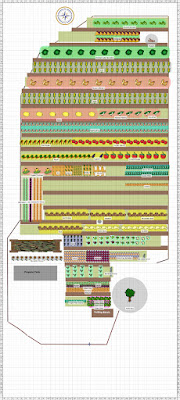
Until that dirt pile moves and our yard is graded, there will be no garden construction. Unfortunately, we don't know when that will happen. It could be next week, or "sometime before July 4." You can't really tell in this picture, but the yard really is a good size. Right now, we're planning on using the back 35' of the lot for the garden, which will still leave us with a large yard. Of course, all plans are subject to change until the actual garden goes in, but this is what I'm currently thinking of using for a layout:


This plot is approximately 60' x 35' and features a living fence (hedgerow). I'm not exactly sure what I will plant yet, but I want it all to be edible. The key is to find plants that will all grow to roughly the same height (I would like 4-5 feet) and won't be damaged with a little pruning. Our backyard is open to all of our neighbors, so I want the hedgerow to be presentable.

Our new neighborhood has bylaws that restrict fence building. If I were to get approval to build a fence, it would have to match the character of the house, meaning it would be very expensive. I think a living fence is a good compromise - I can sink chicken wire on the inside to keep out critters, and all my neighbors will see is the hedge.

The beds in the plan are 3' x 16' and 3' x 3', giving me 456 square feet of growing space in the beds. My previous garden had six 4' x 16' beds (384 feet). I know I definitely want more space than I had in my last garden, and I'm a bit too short to reach the center of a 4' bed. I'm using the long and square beds because I want to try to plant each bed in the same family for crop rotation purposes...and a 3' x 16' bed of some plant families might be a bit much. It also gives me flexibility in terms of early/late season planting to make the most use of the space.

I anticipate that at least one of the 3' x 3' beds will be planted with strawberries and another with rhubarb, and one of the 3' x 16' beds might get planted full of asparagus. Perennial herbs may not be a concern, because I have plenty of other areas to landscape around the house and could work my favorites (chives, oregano, thyme) into the landscape.

I hope to have the garden in by fall so I can plant garlic, and maybe get a cold frame growing to overwinter some spinach and other greens. In the meantime, I've signed up for a CSA with Three Brothers Farm. They're just five miles from my house and in their second year of transition to organic. They've told me I can visit whenever I like, and they're planning some formal on-farm events. Hopefully this will satisfy my need to get my hands in the dirt.

So, this year the blog will probably be a combination of CSA photos and related recipes and an update on garden construction. I'm starting to feel the void where my gardening (and fresh produce) normally is this time of year, but hopefully our new garden will be even better. We learned a lot at out last house, and hopefully can avoid a few mistakes this time around.

Sunday, January 20, 2013

Gross Farms 2.0

I'm excited to announce that Gross Farms will be moving this spring. I started a new job in December that results in an hour+ commute. We put our house up for sale in late November and excitedly accepted an offer on Monday. On Thursday we looked at houses, and fell in love with the second. It's a new build, and I can confidently say it's our dream home. It includes an extremely large backyard (105' x 90'), so I will also be able to construct the garden of my dreams.

The new owners of our home will have 100+ heads of garlic to harvest this summer, and we'll have to say goodbye to the first garden we ever built. Many of our friends are surprised that we're not more attached to it, but we feel it was a learning experience and we'll approach our new garden differently.

Right now, moving day is February 28. We hope that we'll be able to start construction in March or early April and start planting in May. We'll sacrifice some early-season harvests, but it will be worth it in the end.

Stay tuned to follow my garden planning process :)

Sunday, October 28, 2012

Compost, Garlic & Hoops

I spent a solid 3.5 hours working in the garden, assisted most of the time by my wonderful husband. The first order of business was to improve the compost pile. We're pretty lazy composters, and recently the neighbor complained that our compost smelled. The cause was pretty clear - we had way too many "greens" in the compost (kitchen scraps, spent grain from brewing, etc.) and not enough "browns" (leaves, grass clippings, other dead plant matter).

I gathered two garden cart-fulls of leaves from the front yard, dragged them to the back yard compost bin, and mixed it into our current compost. Later I added another cart-full of leaves just for good measure.

In the meantime, Aaron prepared the garlic bed. I try to avoid tilling whenever possible so we can have some nice, fluffy soil full of worms...which means prepping a bed is hard work. I did help, a little. We sifted 12 buckets of finished compost to add to the bed, which I then raked in and smoothed the soil. Time for the garlic! Last year I planted 3 rows in my 4' x 16' beds. I realized I could have planted them closer together, and I finalized that decision after seeing that Daphne planted her garlic in a 6" grid. Fun fact: The holes in the leftover trellis material sitting in our garage are exactly 3" apart—perfect spacers!

Last year I planted about 95 cloves of garlic (and I think I paid about $40 for the seed), and I'm quite sure I won't have enough to get us through until next year's harvest. So, I planted 119 cloves this year (trying to strike a balance between planting more but leaving some for our use). I chose the largest cloves from last year's harvest. The Music cloves are amazing - I planted 63 of those. The Spanish Roja are much less impressive, but since I had them, I planted 56 cloves. Because I planted in a grid instead of in rows, I managed to use about half as much space, even though I planted about 20% more than last year.

The difference in the soil quality between last year and this year is remarkable. Last year I had to dig holes and shove the garlic cloves into the cold earth in between clods of clay soil. This year, I could push the cloves a few inches into the soil and cover them without tools in most cases. The compost has been doing its job :)

To finish, I brought another cart-full of leaves from the front yard, crunched them up a bit, and used them to mulch the garlic. Aaron watered it in, and now we'll just sit back and wait for spring.


Also, Aaron bought some 7mil plastic to put over our bed of chard, carrots and beets. This is our first year using hoops, so it's really just an experiment - but I'll be very excited if I can harvest chard throughout the winter, and carrots and beets in early spring.


Sunday, September 30, 2012

Buying Beef in Bulk

I have a great garden in my back yard, but I do not have the space (nor the blessing of my husband or knowledge needed) to raise my own meat. For the last two years we've been buying our meat at the farmer's market, from local farmers that raise their beef, pigs, chicken, buffalo, etc. on pasture. After thinking about, we decided we'd like to 1) avoid going to the farmer's market so often in the winter, 2) try to eat more cuts of an animal, and 3) save money while still buying from local farmers.

So, we decided that we would buy beef in bulk. We solidified our decision when we found a 16-cubic feet upright freezer on super-sale at the local home improvement store. So, this summer we visited R Farm to check out their farm store. Based on our online searches, they were offering the best value in local beef raised on pasture (although they're not certified organic). We planned to go to the store to buy a few cuts, try them out, and then decide if we would buy. However, while there we heard Mac talking about the cost of feed going up this winter because of the drought, which would ultimately increase the price of beef. We decided right then and there to put a deposit down on a half steer, without ever tasting the meet. We still bought some cuts and took them home with us, and I'm happy to report that they were delicious.

Our farm visit was in mid July, I think. I received a call from Nicole on September 13 letting us know that our steer was ready for slaughter in five days. It was a little faster than I expected, but fine by me. I started reading up about cuts and requested our selected cuts from the butcher R Farm works with, Detjens Northern Trails Meats. They had an online form, which made it super easy.

Yesterday we went to go pick up the meat. It was a lot, but manageable. We filled three coolers. We realized we were newbies because we were the only people not wearing gloves. When packing coolers full of meat, it helps to have gloves on - my hands got a little frosty. Lesson learned from last time.

We got the meat home and packed it in the freezer. I'd say it fills about 60% of our freezer. Our freezer has three shelves, a bottom basket, and door space. The beef filled the bottom rack, bottom shelf, and about 80% of the second shelf.

Here's what we ended up with:

  • 3 chuck arm roasts (about 3 lbs each)
  • 3 blade chuck roasts (about 3 lbs each)
  • 1 rib roast (maybe 5 lbs?)
  • 2 rump roasts (about 3 lbs each)
  • 1 english roast (about 4 lbs)
  • 6 packages of stew meat (about 1 lb each)
  • 4 soup bones
  • 2 large packages of short ribs (about 3 lbs each)
  • 8 round steaks (about 12 oz each)
  • 6 sirloin steaks (about 10 oz each)
  • 8 t-bone steaks (about 8 oz each)
  • 4 porterhouse steaks (about 10 oz each)
  • 8 ribeye steaks (about 10 oz each)
  • 5 lbs of hot sticks
  • 73.5 lbs ground beef
*I didn't weigh any of this meat - I'm totally guessing, and likely a bit conservative. The only thing I'm sure of is the ground beef.

Since most of my beef cooking experience has been tacos, chili, hamburgers, and stew, I'm going through my cookbooks for great ways to use all this beef. We're looking forward to quality meat without all the running to the farmer's market.

As luck would have it, we signed up for a whole-hog butchering class 6 months ago, and that fell on the same weekend our beef was ready. So today we butchered a hog and brought home a cooler full of pork. More on that in a separate post, once I wade through the pictures.

Monday, September 3, 2012

I Will Not Be Defeated

As I briefly alluded to in my previous post, our fall garden bed (chard, beets, turnips, carrots) was overrun with pests that ate off the top of all the tender seedlings. Generally, I'd assume September is too late to start all over again, but I'm going to ride the wave of this crazy climate year and hope our last frost doesn't hit until the end of October. I've replanted the chard, beets, and most of the carrots. I'd run out of St. Valery carrot seeds as well as all turnip seeds.

To ward off the pest, I've already treated the bed for slugs, and I also sprinkled ground pepper over everything. I read on Garden Web that ground pepper is a deterrent for mice, voles, and other crawly critters. Hopefully, this will keep them away until I can get some row covers purchased and installed.

The beets and chard rows are covered with wet burlap, and the carrot rows are covered with boards to help speed germination and stop the ground from drying out so fast. I will try to be diligent - I'd really like some fall/winter greens and root vegetables.

Do you take any special precautions with your fall garden?

Garden Lessons

The garden season is not entirely over (it better not be - there are a lot of green tomatoes on my plants), but I've gotten through enough of it to reflect on things I want to do differently next year. Some of my readers who are more experienced gardeners may say "duh," but this is only my third year of gardening (fourth if you include containers). Hopefully, I have about 50 years of gardening ahead of me. My husband has urged me to write these things down so I don't have the same frustrations next year.

We need to learn how to deal with pests.

Whether flying, crawling, or scampering, this year's mild winter has made every pest invasion more extreme. There are a variety of measures I can take to keep the pests out of my garden.
  • Dig our chicken wire barrier down into the ground.
    • Last year, when I put up the chicken wire along our chain link fence that encloses the garden, I didn't dig it into the ground. I knew I should have, but we had already felled 4 trees, added 4 large beds, hauled in garden soil, and constructed a serious trellis/gate. I needed to get plants in the ground, not dig in the chicken wire—or so I thought. The ground-level barrier worked for a year, but this year I've seen mice and chipmunks running free through the garden. They've definitely learned to burrow. Either this fall or early next spring, we're going to have to invest some serious sweat equity - digging in approximately 125 feet of chicken wire.
  • Invest in some hoops and cover fabric.
    • If the mice do end up getting in, I don't want to let them have my beet harvest again. I know the hoops aren't 100% necessary, but I think I'd like to have them to extend the growing season anyway. I wish I would have purchased some immediately after I discovered the devastation in the beet patch - the entire fall bed (beets, chard, turnips) has had all of its leaves eaten by some type of critter. I dont' think it's going to make it. Hopefully this covering will also keep our plants protected from the bugs that infested our garden this year - at least until they're established enough to need pollinating.
  • Figure out how to outsmart the slugs.
    • We've tried beer traps. We've tried treating with Sluggo (maybe not frequently enough?) The fact is slugs are still decimating many of our crops. They seem to love our soil, and I need to find a way to get rid of them.
  • Pay more attention to my summer squash and cucumbers, and Aaron's hops.
    • I think these need to be sprayed much more often than we did (we use pyrethrin). That, or I need to plan to have two rotations of these plants so I have more maturing after the first planting is lost to the bugs.

We need to make better use of our available space.

  • After harvesting the early bed, most of it stayed empty (except 4 rows of pole beans on 2 trellises) because it was too late to plant the melons I had planned for that bed. I could have, however, planted more summer squash in that space—it would have started producing fruit right as we started severely cutting back our powdery-mildew and squash vine borer infested leaves and stems.
  • Some things can be planted closer together (garlic), while others need to be farther apart (onions, tomatoes, beets).
  • I need to give up on planting in the ground on the back fence line (it's overrun with weeds from all the neighbors) and add a few smaller raised beds back there. They'll be perfect for determinant tomatoes, bush beans, or smaller root veggies like beets and turnips.

I need to build better tomato cages.

  • I have these great tomato cages that store flat (they're made up of 3 poles and 9 connectors/supports each), but I consistently assemble them backwards. I face the supports the wrong way, so as the plant grows it busts out of the cages. Simply snapping on the supports facing the correct direction will fix this problem—yet I've managed to screw it up for 2 years.

I've got to make the basil last.

  • Believe it or not, I think this means planting less of it. I have a tendency to plant too much basil, which results in my inability to keep up with harvests and the premature yellowing of the plants. I need to be ruthless when I harvest so the regrowth continues until the tomatoes are all ripe.
  • Related - when I have a glut of basil, I need to make pesto, even if there is a bunch in the freezer. I'm looking at a pesto-free winter because I didn't make pesto in June when I should have.

It's time to start identifying my preferred varieties.

  • This is most important for me in regards to the plants I grow a lot of and put up for the winter—tomatoes, cucumbers, beans, zucchini, garlic.
  • Tomatoes: I started growing exclusively heirloom tomatoes because it seemed the most authentic type to grow. Don't get me wrong - they're delicious. But, I need a large portion of my tomatoes to be suitable for canning. Most of the heirlooms I grow are delicious slicers, but they don't put out the volume to give me enough for canning.
    • This was the first year I grew some determinant varieties, and Polbig (an early hybrid) is definitely a keeper. It put out tons of fist-sized tomatoes that are perfect for canning, sauce, salsa, etc.
    • Blondkopfchen, an heirloom cherry tomato, is definitely a keeper. It takes longer to ripen than some other cherries, but its huge clusters give me an enormous amount of tomatoes at once - they're perfect for roasting, fresh eating, and soon I hope to give them a try in my newly-purchased dehydrator.
    • Moonshine is my favorite slicer, so that heirloom will still find a place in my garden.
    • Amish Paste, however, is on its way out. The huge tomatoes would be great, except they always split on me, and I end up cutting off way to much to get rid of the damaged parts. Also, I only get a few ripe tomatoes a day - not enough at once to put up anything of consequence.
    • Matt's Wild Cherry tastes delicious, but it sprawls way too much for me (the plant is so tall I can't pick the highest clusters) and it annoys me that the fruits seem to ripen in a set order on the cluster - those closest to the stem ripen much faster than the fruits at the end of the cluster. This means more time spent picking, as you can only pick one or two fruits from each cluster at a time. I appreciated that they ripened the earliest, though - so I'm on the hunt for another early-ripening cherry tomato.
    • Heinz was on trial in my garden this year, and it will probably get another year. The fruits are small, but they take longer than the Polbig's to ripen, meaning I have an extended canning/preserving season.
    • According to this list, I might end up with only 5 or 6 tomato varieties each year (assuming I try something new every year). I need to realize that that's ok. I've got lots of other fish (veggies?) to fry.
  • Beans
    • I've only been growing beans for 2 years, but I've learned a variety of lessons. 1) Don't plant a double row in front of the trellis - the leaves will grow so thick you'll never find the beans! 2) Don't freak out about getting them in the ground as soon as we're clear of the last frost. Better for them to get a start to grow healthy stems than to be set back by cold, wet weather. 3) I need to stagger my bean planting. This year I planted up until July and I think I'll get everything harvested before the first frost.
    • Ideal Market tastes delicious, but it's hard to find in the mess of beans. I'm going to stick with beans that have some sort of color to them so they're easier to pick.
    • Using that criteria, I think Rattlesnake and Purple Trionfo Violetto are keepers.
    • I'm going to actually grow my pole beans on poles (teepees) next year. The beautiful trellises my father in law makes keep getting blown over in the wind.
    • I'll likely try growing edamame again next year, although every single seed failed to come up this year.
    • I'll need another year of trials on growing dry beans. The bugs and slugs were so ruthless this year, they didn't get a fair shot.
  • Cucumbers
    • Actually labeling my cucumbers will likely help me determine which ones I like :) I had a hard time with germination this year, then ended up planting them way too close together. Next year will be better. My husband loves pickles, so I need to plant a lot of pickling cucs and just a few slicers.
  • Zucchini & Summer Squash
    • I'll probably just stick with black beauty and yellow summer squash. They're solid producers, I can freeze a bunch, and they're easy to process.
  • Garlic
    • This was the first year of growing garlic, so it won't actually be until the fall 2013 planting that I can make intelligent choices based on their storage qualities. However, based on what I've seen from our Music variety and what I've heard about its storage qualities, it's a keeper. In fact, it might be the only one I plant this fall. We'll see.
I'm sure there's more......but there are another 6 weeks left in the garden season to get it all out of my head and onto the blog, right?

Wednesday, August 29, 2012

Thursday's Kitchen Cupboard - August 30, 2012

It's been such a crazy week, I posted this on Wednesday thinking it was already Thursday. Needless to say, all this was done before this week started.

I couldn't keep myself out of the kitchen this past week.

First, I harvested the outer stalks of my neglected celery plants and cut them up to freeze in our awesome new freezer with cooled shelves. Everything freezes super fast in this fine piece of machinery (that is, until our 1/2 cow comes and there's no more room on the shelves). I ended up with 2 quart bags full of chopped celery.


Then, I dealt with the green bean harvest that had been piling up. I also took the chance to try out our new FoodSaver. With sales and coupons, we ended up getting it for $30 at Kohl's a few weekends ago. These are frozen in packages that are the perfect size for a meal for the two of us (just over a cup of beans).


Then, it was on to canning. First, I pulled out the "accidental tomato paste" I made last year (that's what happens when you take a nap while you're making sauce) and tried making taco sauce for the first time. It tasted pretty good on the stove - we'll see how it works off the shelf.


I also made fiesta salsa. Although a lot of tomatoes go into salsa, I chose this recipe mainly because it also used cucumbers, and I've been trying to get through the huge pile of cucumbers I overbought when I made pickles. I've yet to find a salsa recipe I like that gets canned, so we'll see how this one holds up.


I also put up about 1/2 a gallon of tomato sauce (frozen in 2-cup portions), but didn't get a picture during the cooking. I used a recipe for "quick blender tomato sauce" that just involves coring and quartering the tomatoes and throwing them in the blender with garlic, basil, parsley, and carrots, then reducing on the stove. It was an excellent way to use the two quarts of canned tomatoes that hadn't sealed during canning the weekend prior, as well as some extras I had sitting around.

I haven't gotten a Kitchen Cupboard post up in awhile, so here are some other things I've been up to:

Mom and I had a marathon tomato canning session on
August 19. I bought 50 lbs of tomatoes at the farmer's market
for $30. She planned to make the trip and I didn't have nearly
enough tomatoes ready, so now I've really got a lot!

I also canned over 40 jars of pickles in July, but apparently haven't taken photos. Perhaps they'll make an appearance in a season-ending pantry photo.

To see what others are doing with their harvest, visit the Gardener of Eden.